Machinima Production cover

Game cinematics

Staging stories with game assets.

I created these films with existing JX3 assets in a studio-developed production tool built on Unreal Engine, using Sequencer to arrange shots. I staged and lit the scenes, configured motions and adjusted facial expressions, then keyframed the performance and edited the final films.

Role
Performance planning and video production
Tools
Unreal Engine-based production tool with Sequencer
Assets
Existing game characters, environments and motions

Selected works

Two approaches to cinematic storytelling.

Machinima music video · Excellence Prize

Drumfire Dance

Set in war-torn ancient China, the film interweaves a dancer rallying a village through drumming with an empire's movement from prosperity to devastation. Recurrent imagery brings both strands together at a dawn after darkness.

Scene staging and narrative transitions
Dialogue-driven character drama

Afterword

A protagonist struggles to reclaim his sense of self after physical injury. Three perspectives culminate in an overheard conversation that exposes his self-doubt and prompts an emotional confrontation.

Facial performance within dialogue

01 / Staging

Drumfire Dance

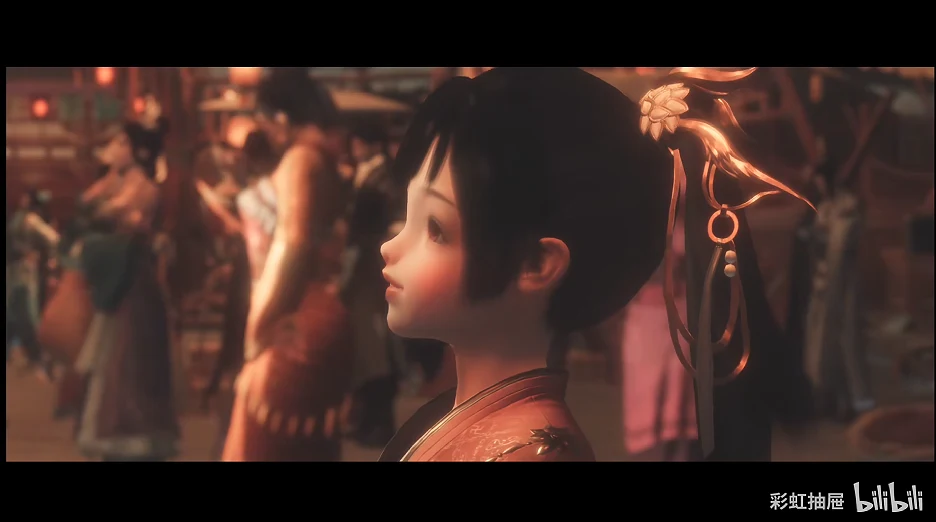
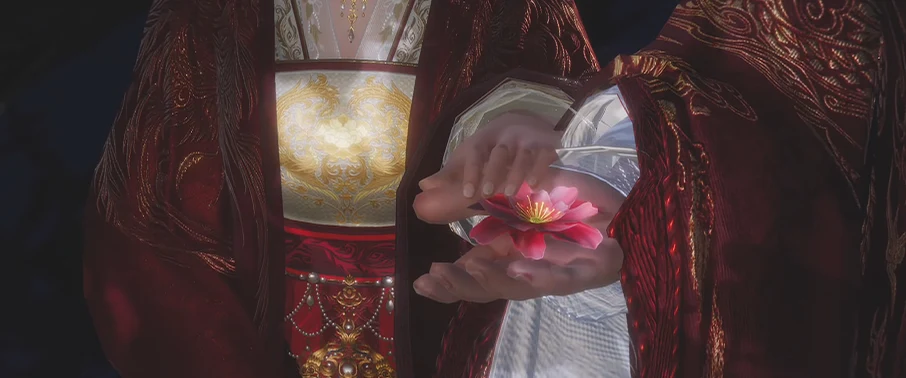
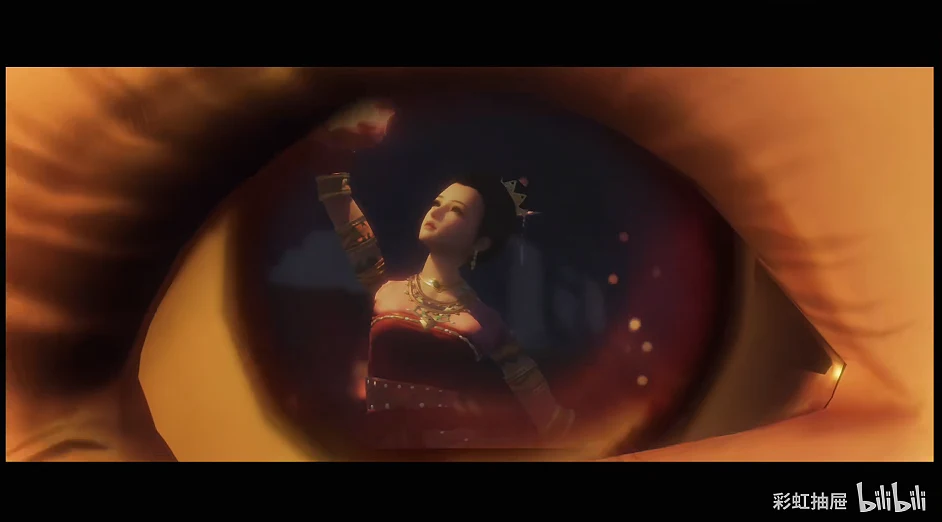
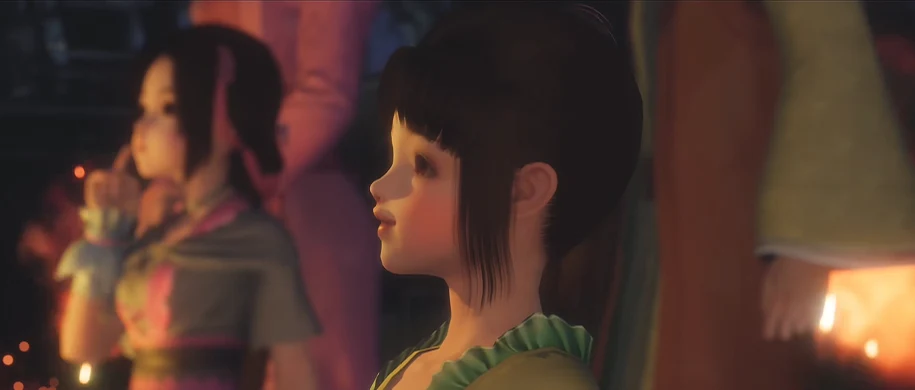
I used recurring visual motifs to link scenes: the child’s gaze introduces the opening city scene, and a falling flower leads into the next setting.

ShotCameraDirectionFrame
12 · 1sPush into an extreme close-up.Show the dancer reflected in the child’s eye. Reduce the music while the strings repeat the theme.Shot 12: the dancer reflected in the child’s eye
15 · 4sFixed three-quarter close-up.The child watches with her mouth slightly open, nods, then turns. The music becomes lighter as her viewpoint establishes the recollection.Shot 15: the watching child
16 · 8sHold the framing.Dissolve the background into the opening city scene, carrying the viewing position across the scene change.Shot 16: transition into the opening city scene
23–27Follow the flower, then the hands.A falling flower leads into the court sequence. Attention shifts to a hand-to-hand exchange between the characters.Shot 27: the characters’ hands

02 / Performance

Afterword

I focused on emotional exchanges through facial expression, gaze and small changes in posture. I used a moving close-up for the speaker and a fixed reverse shot for the listener, allowing the dialogue to continue across the cut.

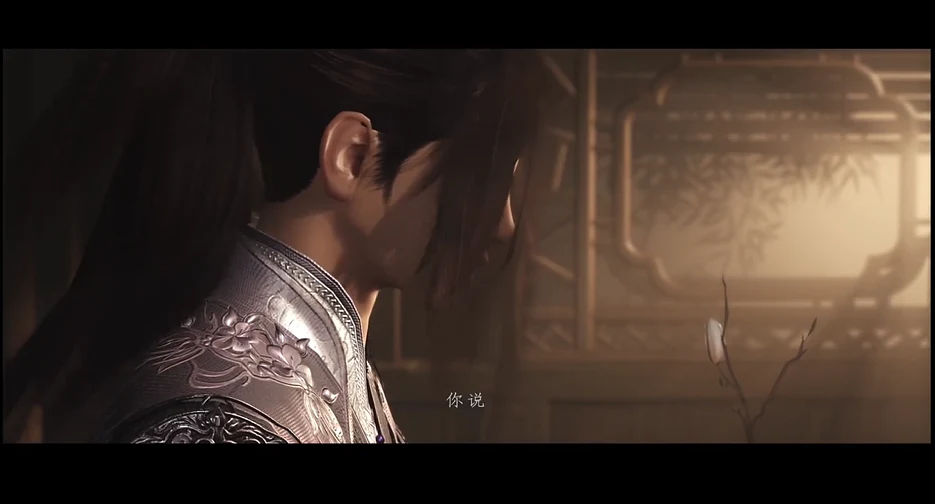
Character 2 looking down in the sunlit room
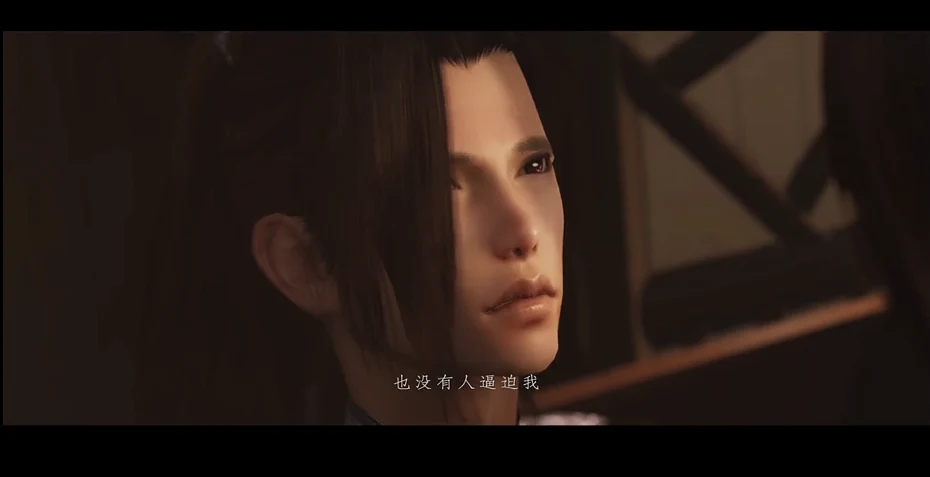
95 · Hesitation · 3sA slow push-in follows Character 2 as he raises his lowered head to speak. The held pause before the eye movement establishes hesitation; side lighting makes the change in expression readable.
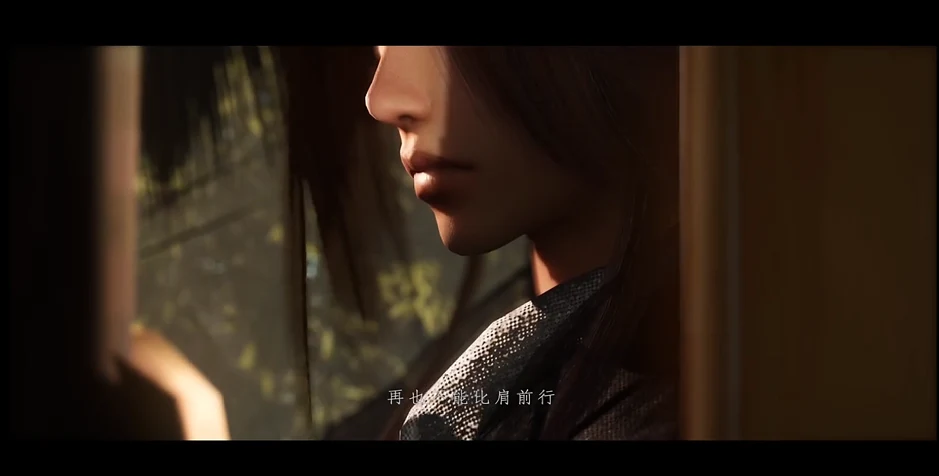
A partial view of Character 1 during the overheard conversation
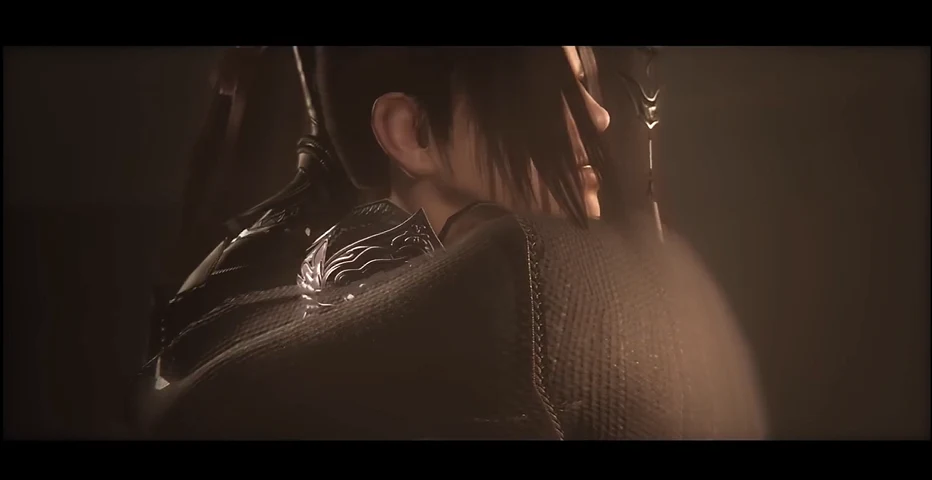
97 · Overhearing · 6sCharacter 2’s dialogue continues as focus moves through the partly open door to Character 1. This reveals the unseen listener without interrupting the conversation, preparing the later confrontation.
Character 1 delivering the confession in shot 128
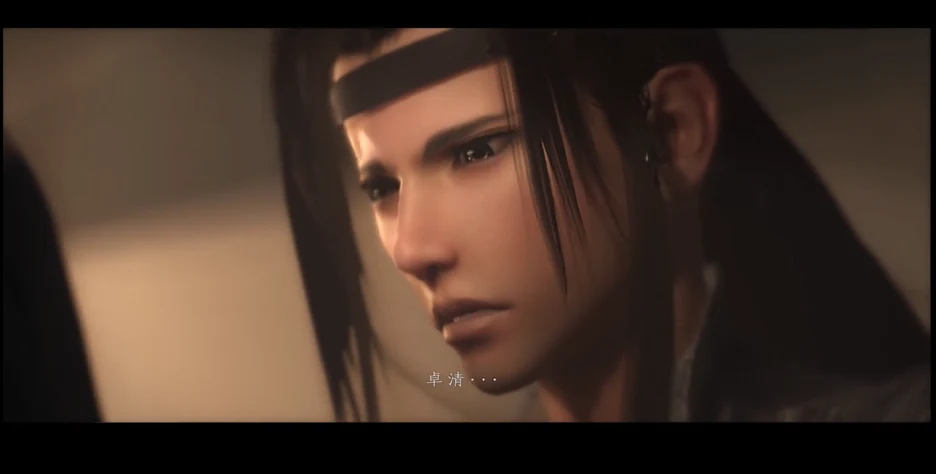
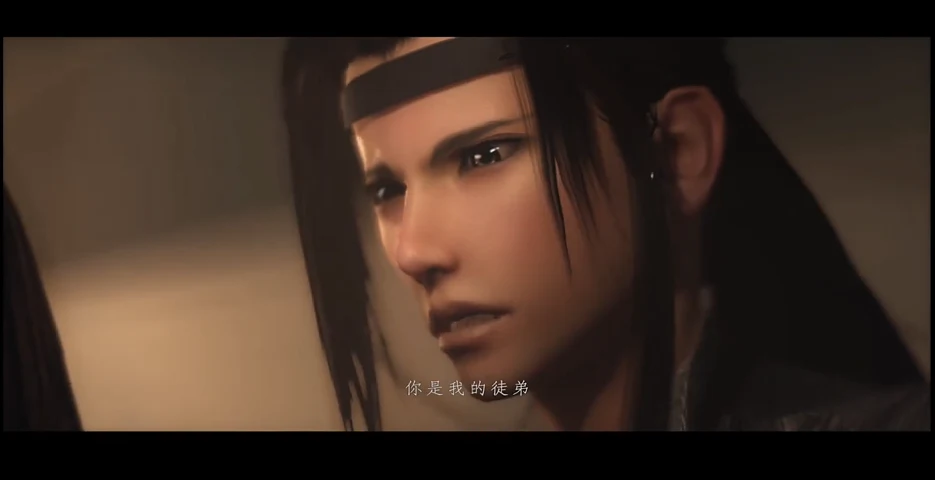
128 · Confession · 17sThe close-up slowly tightens as Character 1 pulls Character 2 towards him. Raised brows give way to a lowered brow and forward lean, making the opening lines confrontational; his brow relaxes on “because I wanted to,” shifting the delivery towards confession.
Character 2 listening in reverse shot 129
129 · Reaction · 5sCut to a fixed reverse close-up while Character 1 continues speaking off-screen. Character 2’s widened eyes and parted lips show surprise, while a slight body movement carries the pull across the cut and preserves physical continuity.
Character 1 in a close-up during his slower declaration
131 · Resolve · 8sReturn to Character 1 in a frontal close-up and tighten the framing very slowly. His gaze briefly rises, then lowers; reddened, tearful eyes reveal vulnerability while the measured, firm delivery turns the earlier confrontation into a declaration of commitment.
The characters embracing at the end of the exchange
150–152 · ReassuranceMove from the embrace to the hand returning the gesture, then to the tearful face. The answering hand makes acceptance visible before the facial close-up resolves the emotional exchange.

Source: my original performance planning sheets.